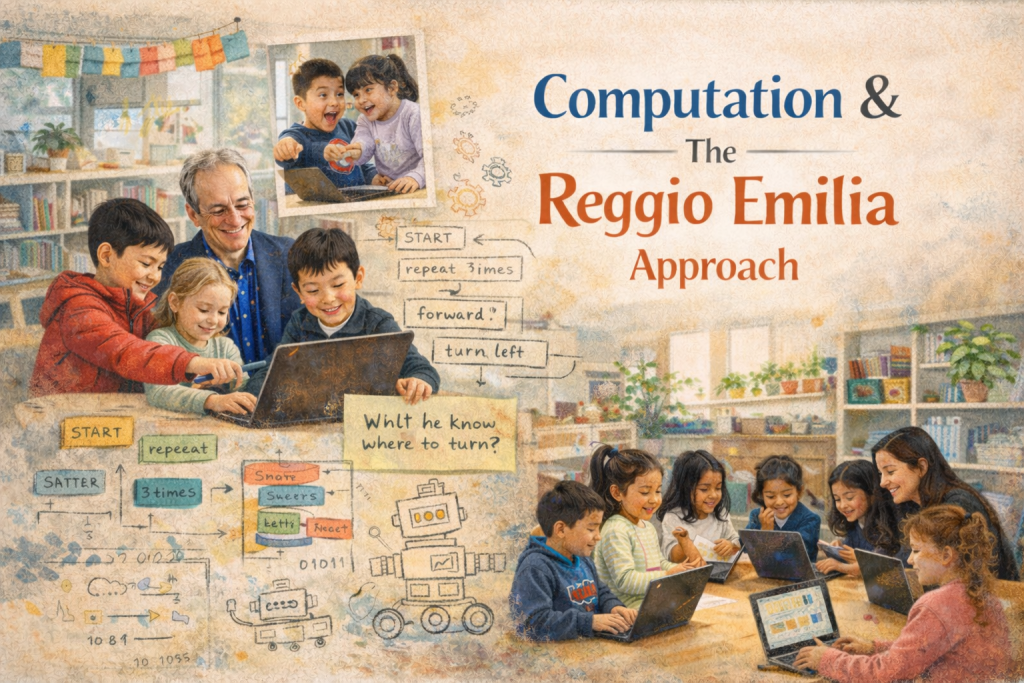
Computation & The Reggio Emilia Approach
TL;DR — But Please Don’t Skip This One — Free White Paper!
Loris Malaguzzi gifted us the metaphor of a hundred languages of children. This whitepaper argues that computation belongs among them — and that most schools, even Reggio-inspired ones, haven’t recognized it yet.
In Computation and the Reggio Emilia Approach, Dr. Gary Stager makes the case that computation is not a threat to the values at the heart of the Reggio Emilia Approach — it is their natural extension. Where Malaguzzi insisted that children have “a hundred ways of thinking, of playing, of speaking,” computation honors that spirit. It does not impose a single correct answer or a single path to understanding. It reveals what Papert called epistemological pluralism — the recognition that there are many valid ways of knowing, and that children’s ways of knowing deserve to be respected. The paper also makes the essential distinction between digital and computational projects.
The connections run deep. Documentation, that cornerstone of Reggio practice, finds a powerful new form in computational work: a child’s code is a visible record of their thinking, as readable and revealing as any panel of photographs or transcribed dialogue. Debugging mirrors the iterative, reflective spirit of project work — the willingness to be wrong, to revise, to find a new path. Imagine a computational atelier, like the physical one, as a space where powerful ideas are tinkered with, hypotheses are tested, and knowledge is constructed.
The evidence is concrete. A kindergartener builds a robot ballerina from pipe cleaners and LEGO bricks — and programs it to dance. A group of educators invents “Shoe-ber,” a working device that summons a taxi when you click your heels together. These aren’t representations of ideas. They are ideas made real. Computation is what closes the gap between what children imagine and what they can bring into existence.
This is not a paper about teaching kids to code, although programming is a powerful form of knowledge construction. It is a plea for what children deserve — and about what becomes possible when we expand their palette of tools and possibilities.
📄 Read it. Download it. Share it with every educator who has ever felt the tension between what school is and what it could be.
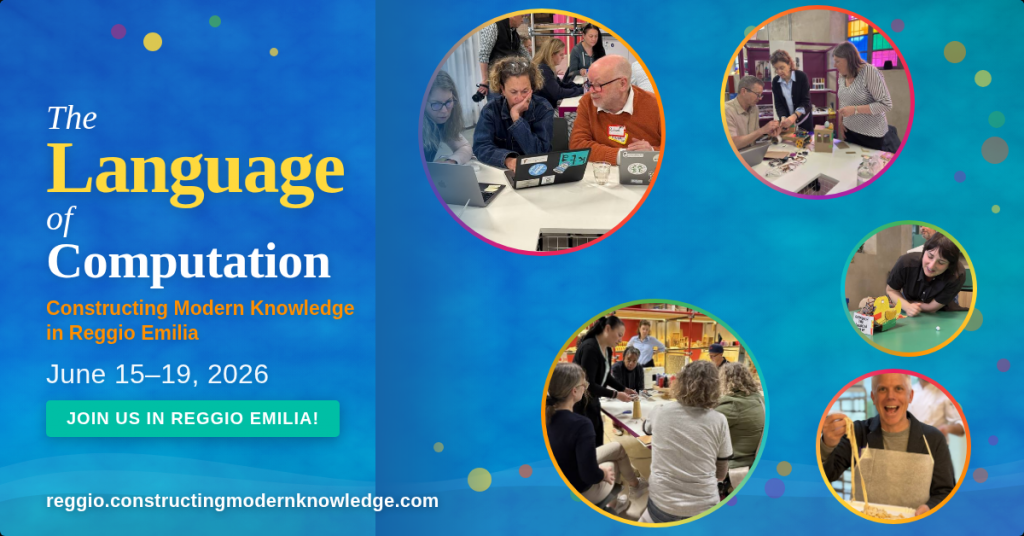
Don’t forget to join us June 15-19, 2026 in Reggio Emilia, Italy for The Language of Computation – Constructing Modern Knowledge in Reggio Emilia!